Goodbye WordPress: Discover how GitHub Copilot and modern tools like Zed, Next.js, and Sanity CMS are revolutionizing web development—boosting speed, SEO, and collaboration for the future of digital experiences.
1. Introduction: The Legacy of WordPress and the Changing Web
For nearly two decades, WordPress has been the backbone of the internet. Powering over 40% of all websites, it democratized publishing and made web development accessible to millions. Its plugin ecosystem, themes, and user-friendly dashboard helped businesses, bloggers, and developers launch sites with ease.
But the web is evolving. Today’s digital experiences demand speed, security, scalability, and seamless collaboration. The rise of cloud computing, AI, and modern frameworks is transforming how we build and maintain websites. Developers are seeking tools that automate repetitive tasks, improve code quality, and enable real-time teamwork—ushering in a new era of web development.
2. The Limitations of WordPress
While WordPress remains popular, its limitations are increasingly apparent in a fast-moving tech landscape:
- Maintenance Overhead: Frequent updates to WordPress core, plugins, and themes are essential for security, but they can break functionality and require constant attention. Plugin conflicts and deprecated code are common headaches.
- Performance Bottlenecks: Heavy themes and plugins can slow down websites, impacting user experience and SEO. Optimizing for speed often means stripping away features or investing in expensive hosting.
- Security Risks: WordPress sites are frequent targets for hackers due to their popularity and reliance on third-party plugins. Keeping a site secure requires vigilance and technical know-how.
- Developer Experience: Customizing WordPress often means wrestling with legacy PHP code, inconsistent APIs, and limited tooling. Modern JavaScript frameworks offer more flexibility, composability, and developer happiness.
- Scalability Issues: As businesses grow, WordPress can struggle to handle complex workflows, integrations, and high traffic. Scaling often requires custom engineering or moving to more robust platforms.
Real-World Example:
A mid-sized telecom company running a WordPress site for their fiber optic services found that plugin updates routinely broke their contact forms and slowed down their homepage. Their developers spent more time troubleshooting than innovating.
3. The Rise of AI and Modern Developer Tools
The future of web development is being shaped by artificial intelligence and cloud-native workflows. Two tools stand out:
GitHub Copilot: Your AI Coding Assistant
Powered by OpenAI, GitHub Copilot is revolutionizing how developers write code. It suggests entire functions, refactors legacy code, writes documentation, and even helps debug—all in real time. Copilot learns from millions of open-source projects, offering context-aware suggestions that speed up development and reduce errors.
How Copilot Works:
- As you type, Copilot predicts your next line of code.
- It can generate boilerplate, complex algorithms, and even tests.
- Developers can accept, reject, or modify suggestions instantly.
Zed: The Next-Gen Code Editor
Zed is a lightning-fast, multiplayer code editor designed for modern workflows. With deep GitHub integration, real-time collaboration, and AI-powered features, Zed empowers teams to work together seamlessly—whether they’re across the office or across the globe.
Key Features:
- Multiplayer editing: See teammates’ cursors and edits live.
- Built-in Copilot support: AI suggestions directly in your editor.
- Cloud sync: Access your projects anywhere, anytime.
The Shift to Cloud-Based, Collaborative Workflows
Modern development is no longer a solo endeavor. Teams use GitHub for version control, code reviews, and CI/CD pipelines. With Copilot and Zed, collaboration is instant, automated, and intelligent.
4. Case Study: Migrating Wolken ASM GmbH Website
The Decision to Move Away from WordPress
Wolken ASM GmbH, a leader in fiber optic solutions in Germany, faced the typical challenges of a WordPress site: slow performance, plugin conflicts, and limited flexibility. Their goal was to create a fast, scalable, and SEO-optimized website that could showcase their expertise in “Glasfaser” (fiber optics) and support rapid growth.
Planning the Migration
The team outlined key objectives:
- Improve site speed and Core Web Vitals.
- Enhance SEO for “Glasfaser” and regional keywords (NRW, Düsseldorf, Duisburg, Bonn, Lippstadt).
- Streamline content management for non-technical staff.
- Enable AI-powered development and collaboration.
Building with the Modern Stack
- Frontend: Next.js (React, TypeScript) for fast, dynamic pages.
- Styling: Tailwind CSS for responsive, maintainable design.
- CMS: Sanity Studio for flexible, structured content.
- Collaboration: GitHub for version control, Copilot for AI coding, Zed for real-time editing.
Before and After
Before:
- Frequent plugin issues.
- Slow page loads.
- Manual SEO updates.
After:
- Lightning-fast performance.
- Automated SEO meta tags and schema markup.
- Developer productivity boosted by Copilot’s suggestions.
- Content editors use Sanity Studio for easy updates.
Screenshots & Code Snippets
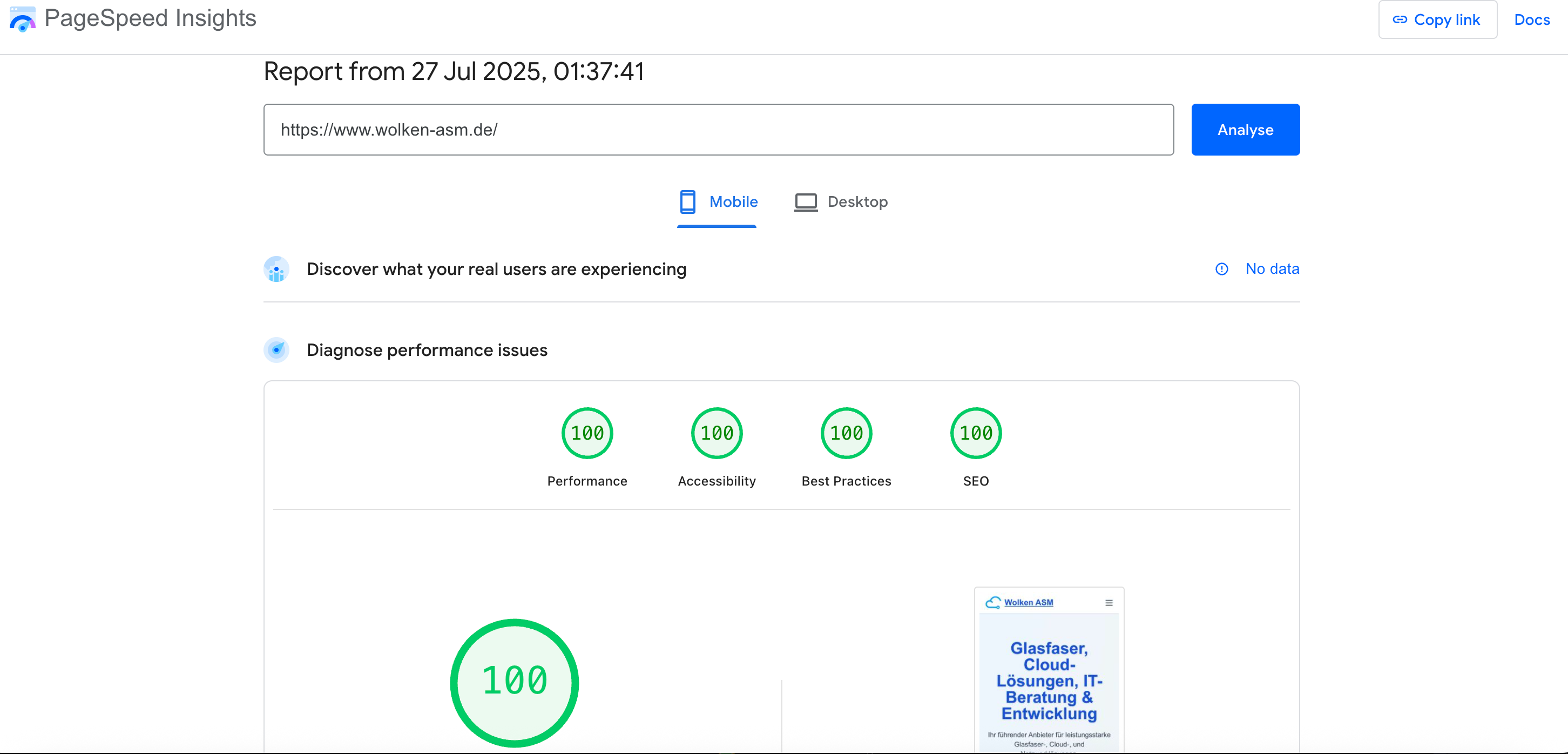
Team Insights
“Switching to Copilot and Zed was a game-changer. We spend less time on boilerplate and more on innovation. Our SEO rankings for ‘Glasfaser NRW’ improved within weeks.”
— Dr. Aleksandar Zakic, Wolken ASM GmbH
5. How GitHub Copilot Changes the Game
- AI-Powered Code Suggestions: Copilot predicts your next move, writes repetitive code, and even suggests entire modules. Developers report up to 30% faster coding speeds.
- Refactoring and Documentation: Legacy code is easier to update. Copilot can refactor functions and generate documentation, reducing technical debt.
- Error Reduction: AI suggestions catch common mistakes and enforce best practices, leading to fewer bugs and smoother deployments.
Developer Testimonials
“Our onboarding time for new developers dropped by half. Copilot helps them learn our codebase and best practices instantly.”
6. The Modern Stack: Benefits and Best Practices
- Composability: Build reusable components and APIs that scale with your business.
- Scalability: Deploy to the cloud, handle traffic spikes, and integrate new features with ease.
- Security: Fewer plugins mean fewer vulnerabilities. Automated testing and CI/CD pipelines catch issues before they reach production.
- Performance: Optimized bundles, image compression, and server-side rendering deliver fast, reliable experiences.
- Continuous Integration: Automate builds, tests, and deployments with GitHub Actions.
7. Practical Guide: Making the Switch
Step-by-Step Migration Checklist:
- Audit your current WordPress site: content, plugins, SEO.
- Plan your new architecture: choose frameworks, CMS, and hosting.
- Set up your GitHub repo and enable Copilot.
- Build your frontend with Next.js and Tailwind CSS.
- Migrate content to Sanity Studio.
- Test performance, SEO, and accessibility.
- Deploy to Vercel or your preferred cloud platform.
- Train your team on new workflows (Zed, Copilot, Sanity).
Tips:
- Start with a small pilot project.
- Use Copilot for boilerplate and repetitive tasks.
- Document your migration process for future reference.
Common Pitfalls:
- Underestimating content migration complexity.
- Neglecting SEO redirects and meta tags.
- Failing to onboard non-technical staff to the new CMS.
8. The Future of Web Development
AI is transforming every aspect of coding, design, and collaboration. In the next 5–10 years, expect:
- Smarter code generation and debugging.
- Real-time, global collaboration.
- Seamless integration of design, content, and development.
- Businesses moving away from legacy platforms to composable, cloud-native stacks.
Why Invest Now?
- Stay ahead of competitors.
- Attract top developer talent.
- Deliver better experiences to your users.
9. Conclusion
WordPress changed the web, but the future belongs to AI-powered, collaborative, and scalable tools. GitHub Copilot, Zed, and the modern stack empower developers and businesses to build faster, smarter, and more secure websites.
**Ready to make the switch? The future of web development is open, intelligent, and collaborative. Welcome to the new era.